

FRU
First Polish App – from climbers for climbers
Expand your climbing experience
Overview
ROLE
Product Design (UX / UI)
TIMELINE
9 months
TOOLS USED
Miro / Figma
This project is a fictitious scenario, completed as a part of SWPS Academy.
Background
The idea for the FRU app emerged from the challenges faced by climbers during their trips. Traditional climbing resources like bulky guidebooks are outdated and inconvenient. Finding up-to-date information about climbing routes, especially in regions like the Jura Krakowsko-Częstochowska, is difficult, posing risks and frustration for climbers.
Problem
Climbers face several key issues:
Outdated Information: Guidebooks often miss new routes or updated conditions.
Lack of Real-Time Data: Climbers may arrive at routes that are overgrown, damaged, or inaccessible.
Limited Social Connectivity: The climbing community can be closed off, making it hard for beginners to find trusted partners.
Technical Challenges: Remote climbing areas often lack internet coverage, limiting access to online resources.
Project Goals
The primary aim of the FRU app is to create a comprehensive, user-friendly platform that enhances the climbing experience by addressing common pain points in the climbing community. The goals are centered around improving accessibility, safety, and engagement.
01 / Empathize - Exploring & Researching the User's Needs
Overview
To ensure FRU effectively addresses the needs of climbers, the team embarked on a comprehensive research phase. This involved understanding the current market landscape, identifying user pain points, and uncovering opportunities to enhance the climbing experience.
Research Approach
The research methodology encompassed two primary strategies:
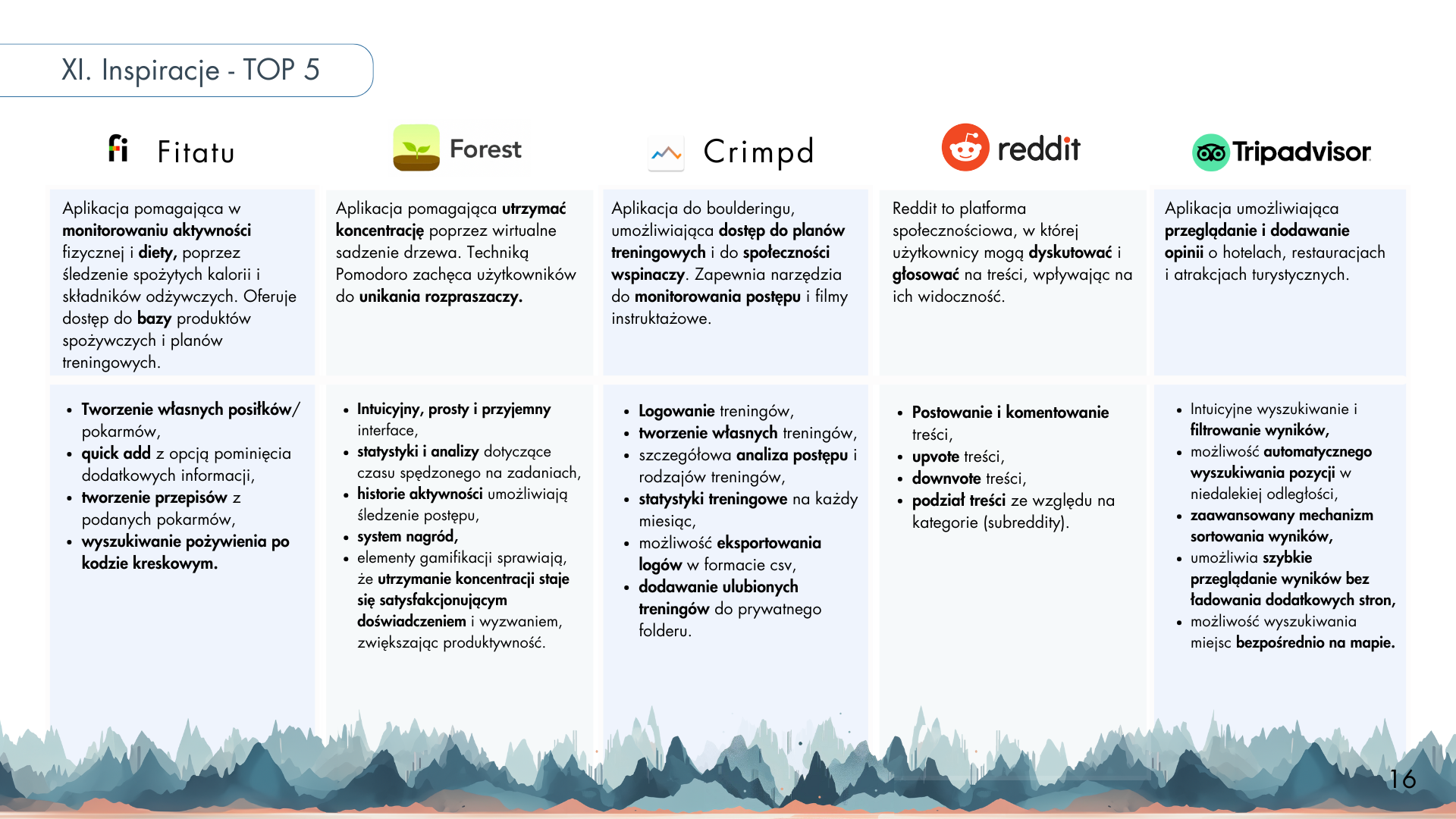
Competitive Analysis: Examining both direct and indirect competitors to recognize prevailing patterns, trends, and challenges within the climbing community.
Customer Interviews: Engaging directly with climbers to gather qualitative insights into their experiences, needs, and expectations.
Competitive Analysis
The competitive analysis included direct and indirect competitors like 27 Crags, Vertical Life, and 8a.nu, focusing on their strengths, weaknesses, and gaps in user experience. Common limitations observed were outdated climbing route data, poor user interfaces, limited offline capabilities, and weak social integration.
Customer Interviews
A diverse group of climbers participated in in-depth interviews, providing valuable perspectives on their climbing experiences. The participants varied in age, gender, and climbing proficiency, offering a holistic view of the community’s needs.
Key Insights from Customer Interviews:
Trust in Climbing Partners: Climbers emphasized the importance of trust and reliability when selecting partners. Building a supportive and trustworthy community is paramount.
Desire for Updated Route Information: Participants expressed frustration with outdated or inaccurate route data, highlighting the need for real-time updates on route conditions and accessibility.
Preference for Simplicity: While some climbers appreciate advanced features, there is a general preference for straightforward, user-friendly interfaces that do not overwhelm users with complexity.
Need for Offline Access: Given that many climbing locations lack reliable internet connectivity, offline access to route information and maps is considered essential.
Interest in Progress Tracking: Climbers showed enthusiasm for tools that allow them to log their climbs, monitor improvements, and set personal goals.
Value in Community Engagement: Many participants seek platforms where they can share experiences, seek advice, and connect with others who share similar interests.
02 / Define - Establishing the User's Needs and Problems
Overview
After synthesizing the gathered data, clear user needs and key problems were identified to inform the app’s features.
Empathy Map Synthesis
An empathy map was created to encapsulate the climbers’ experiences, capturing what they say, think, feel, and do. This synthesis highlighted:
Says: “I need reliable partners.” “It’s frustrating when route information is outdated.”
Thinks: Concerns about safety, desires for personal improvement, and aspirations to connect with a like-minded community.
Feels: Excitement about discovering new routes, frustration with unreliable information, and a sense of accomplishment when achieving goals.
Does: Regularly checks multiple sources for route information, seeks out new climbing partners, and documents climbs manually.
Persona Development
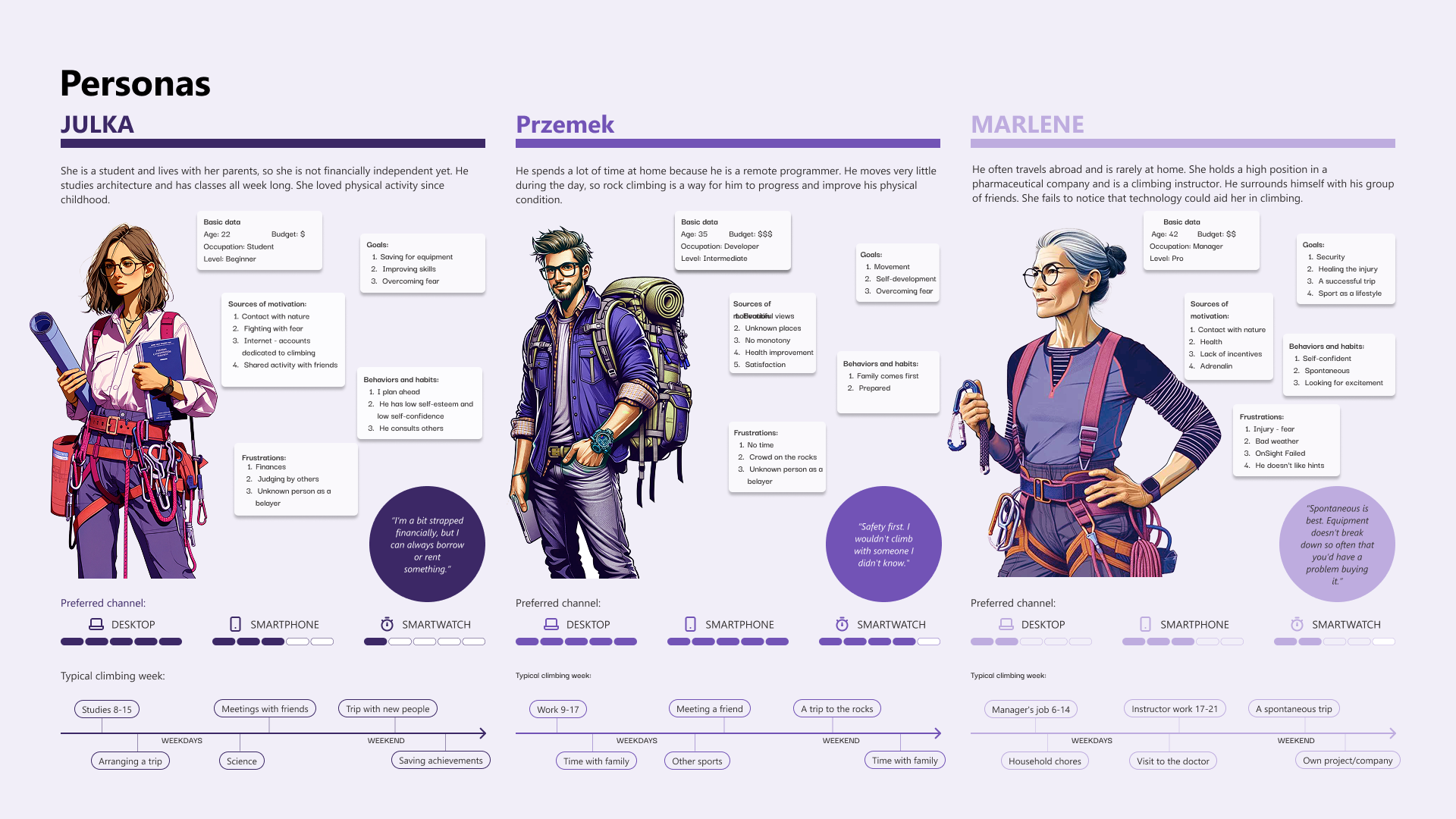
Based on the empathy map and interview insights, the team developed detailed personas representing typical users:
Julka (Beginner): Motivated by overcoming fear, seeks supportive climbing partners and guidance.
Przemek (Intermediate): Focused on tracking achievements, improving skills, and seeking new climbing challenges.
Marlena (Advanced): Prefers climbing independently but values reliable route information.
03 / Ideate - Creating the Framework
Overview
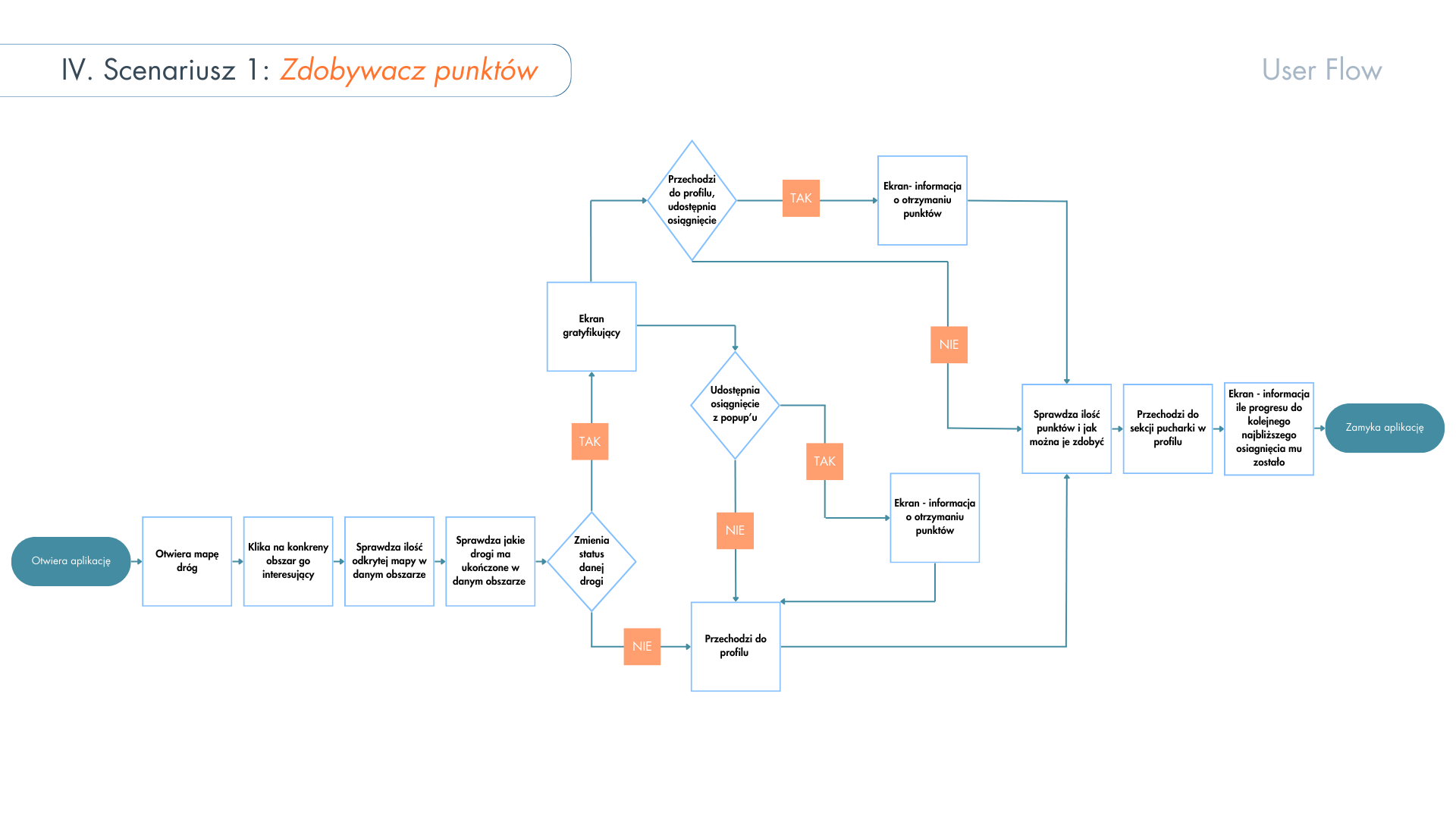
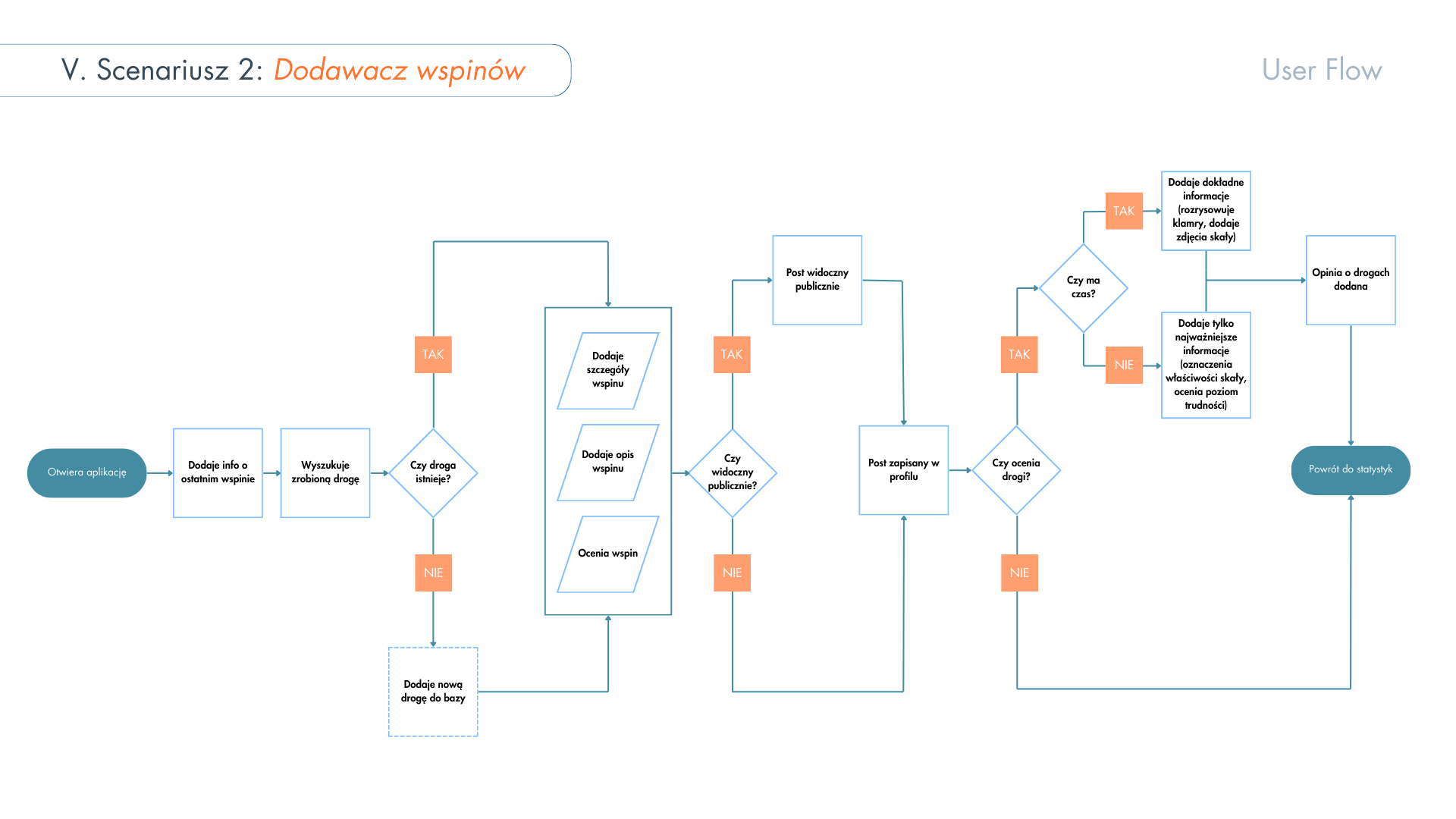
The ideation phase involved creating detailed task flows, information architecture, and user flows.
Task Flow
The ideation process led to the development of a feature roadmap, prioritizing functionalities such as:
Interactive Climbing Map: Providing detailed, real-time information on climbing routes.
Community Engagement Platform: Facilitating connections, discussions, and partnerships among climbers.
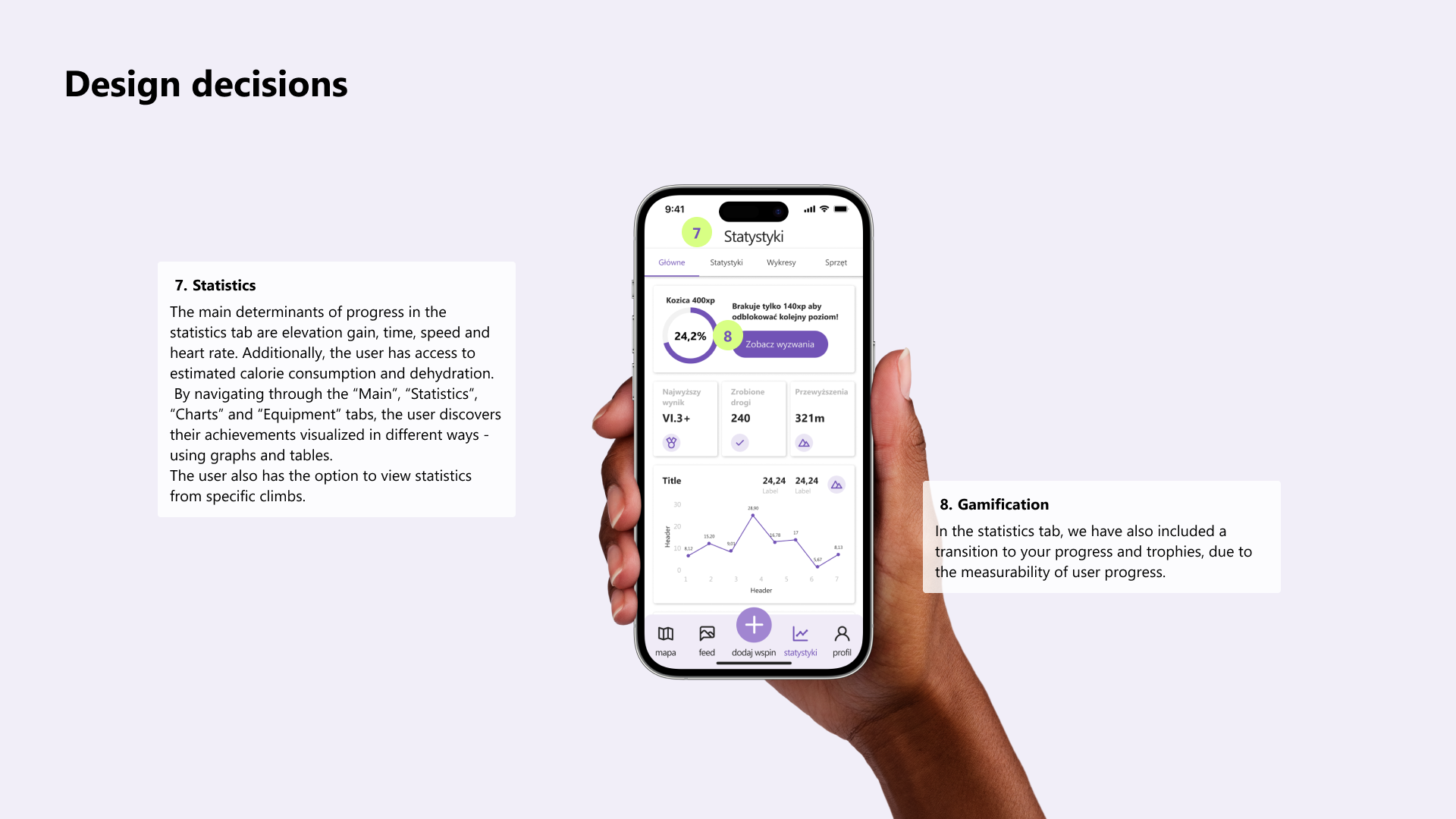
Activity Tracking: Enabling users to log climbs, monitor progress, and set goals.
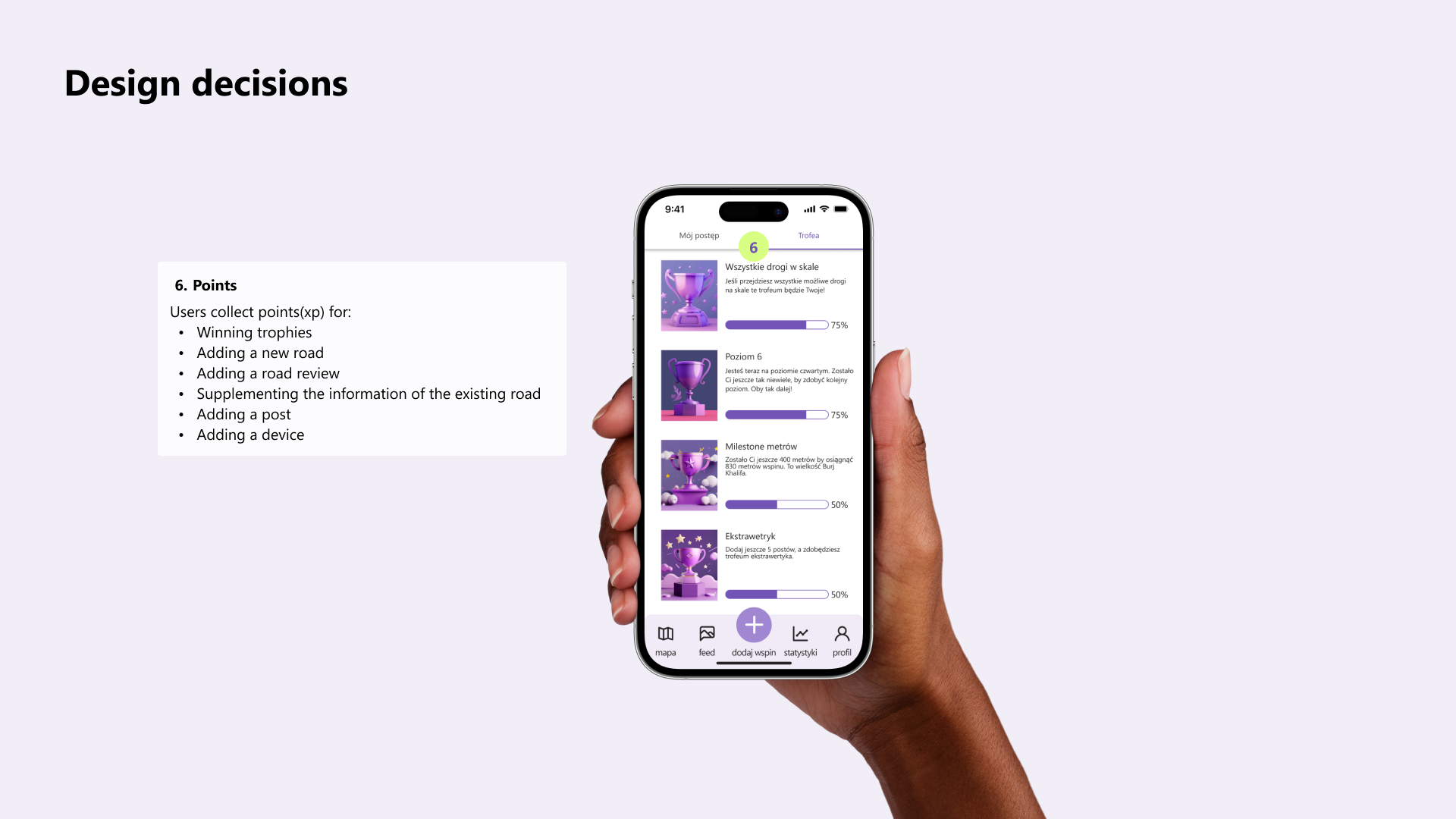
Gamification Elements: Introducing achievements, badges, and leaderboards to motivate users.
Offline Access: Ensuring critical information is available without internet connectivity.
Safety Features: Implementing emergency contacts and quick alert functions for incidents.
Information Architecture
An open card sorting exercise was conducted online with 10 climbers, resulting in categories such as Routes, Community, Stats, and Offline Capabilities.
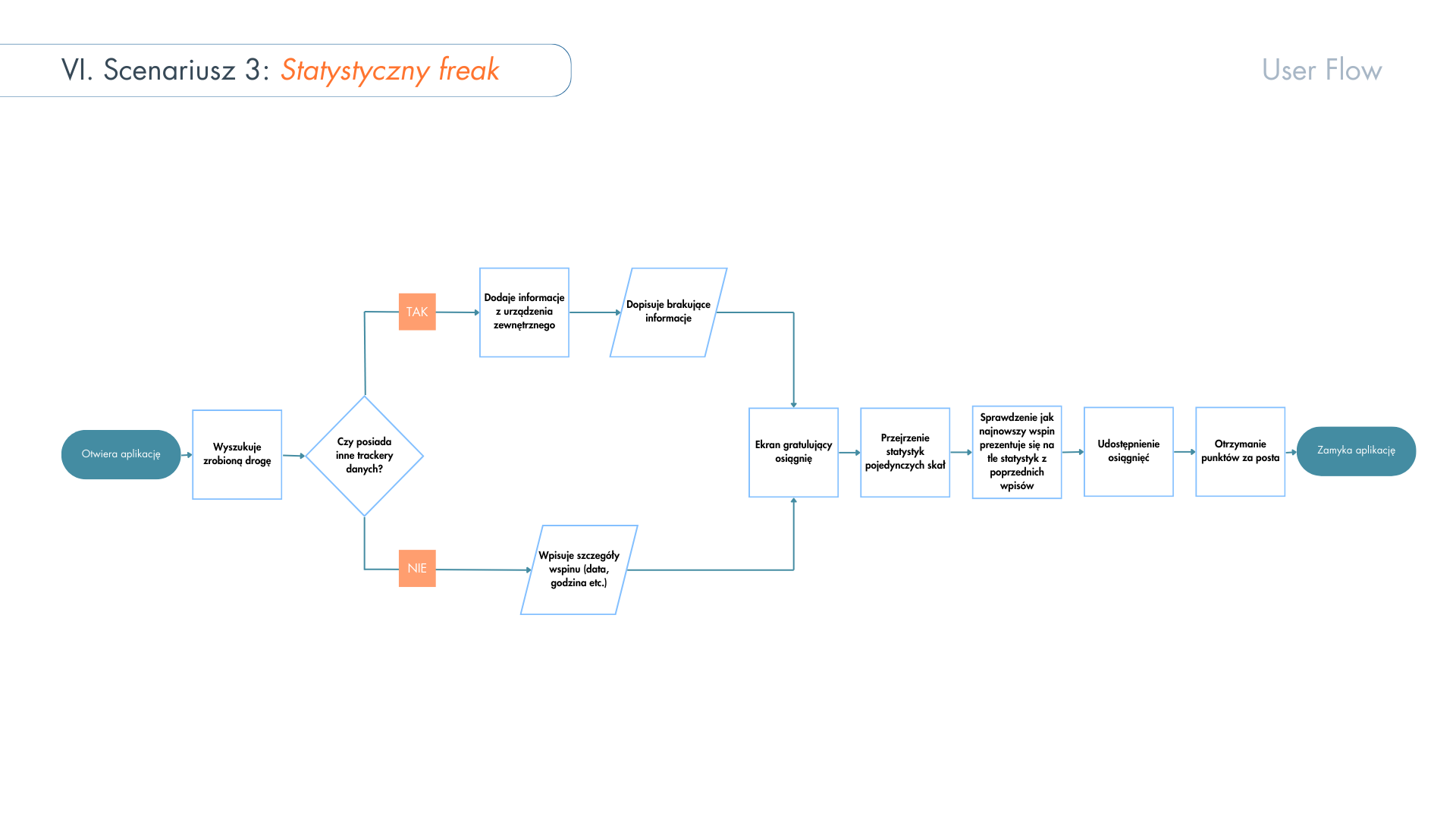
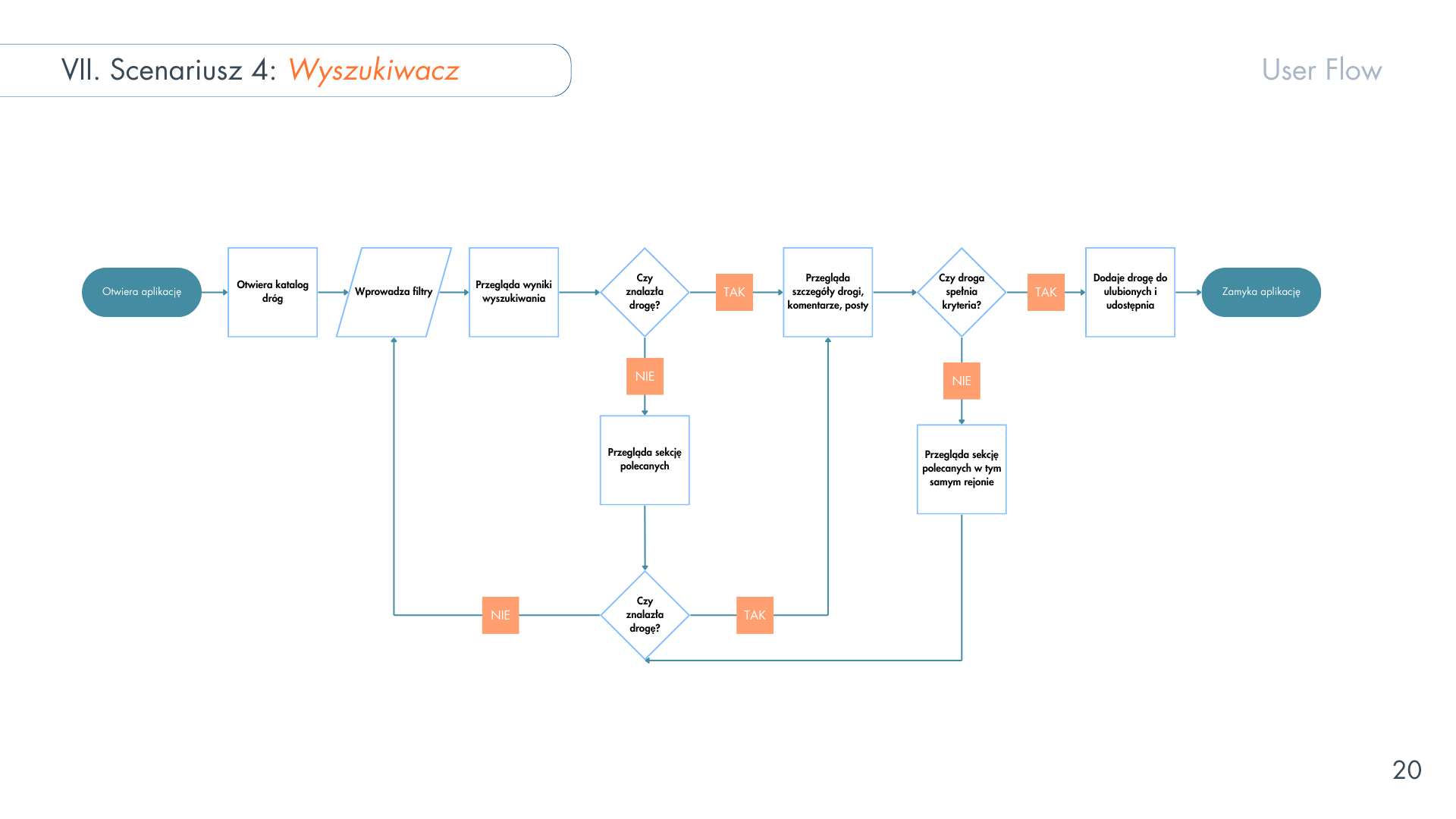
User Flow
Streamlined user flows ensured easy navigation between finding routes, engaging socially, tracking climbing progress, and accessing safety features.

04 / Prototype - Bringing the Design to Life
Overview
We developed detailed sketches, wireframes, and eventually high-fidelity prototypes.

Sketches & Wireframes
Initial sketches transitioned into interactive wireframes, emphasizing intuitive navigation, detailed route information, and engaging community features.
Branding & UI Kit
Branding focused on approachable, vibrant aesthetics to foster community spirit and motivation, using clear typography and engaging color schemes for accessibility.
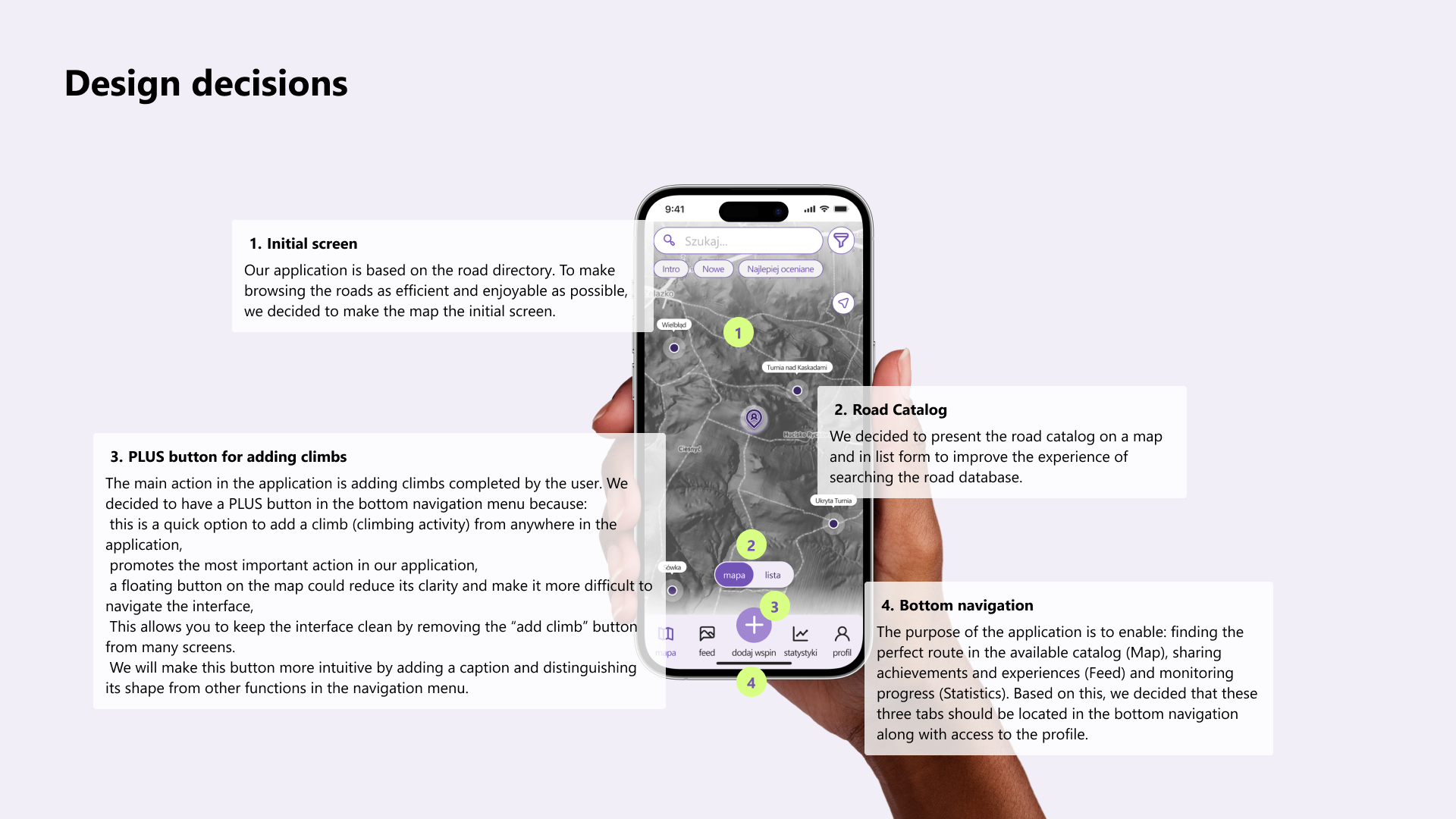
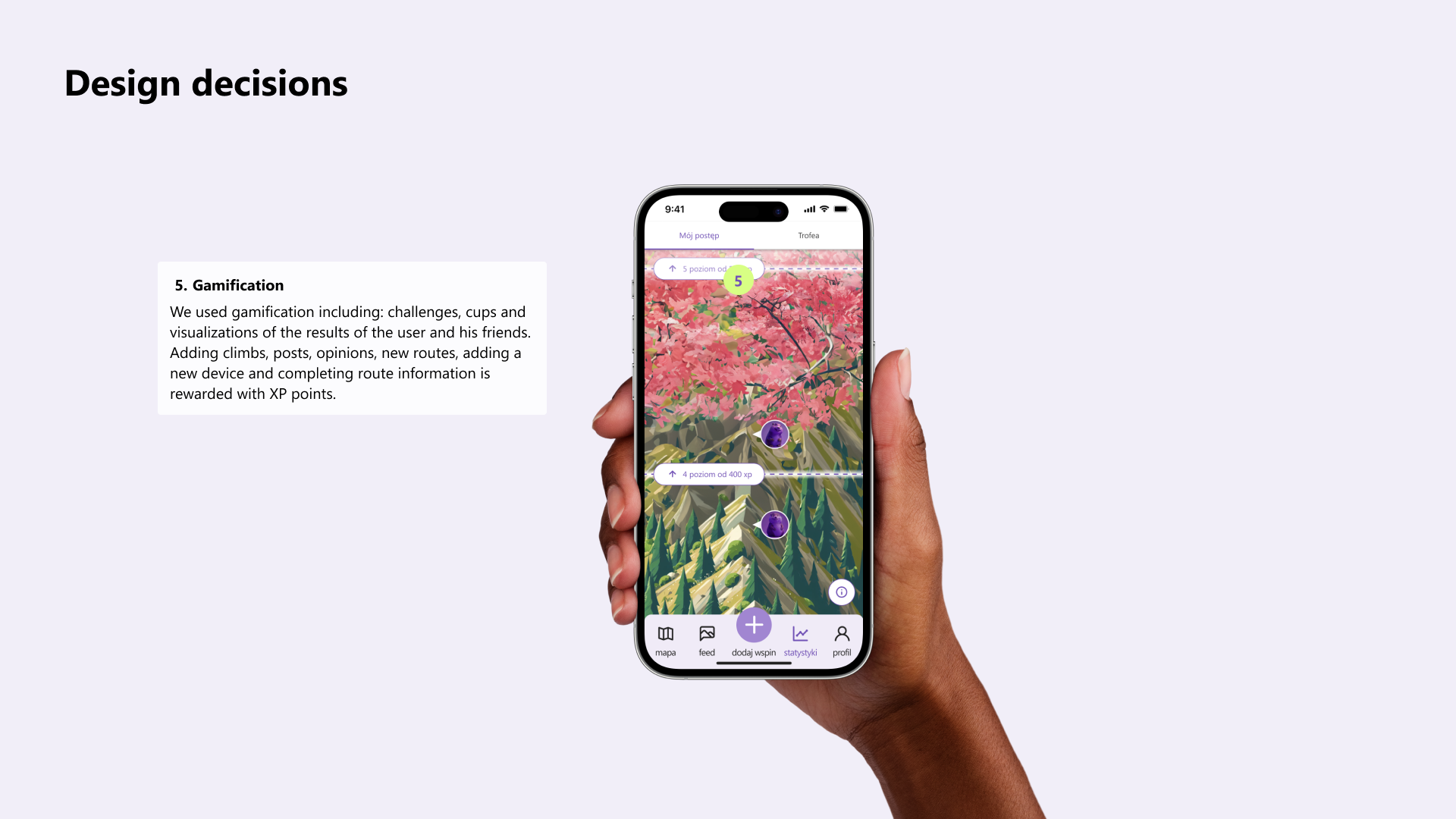
Final Design
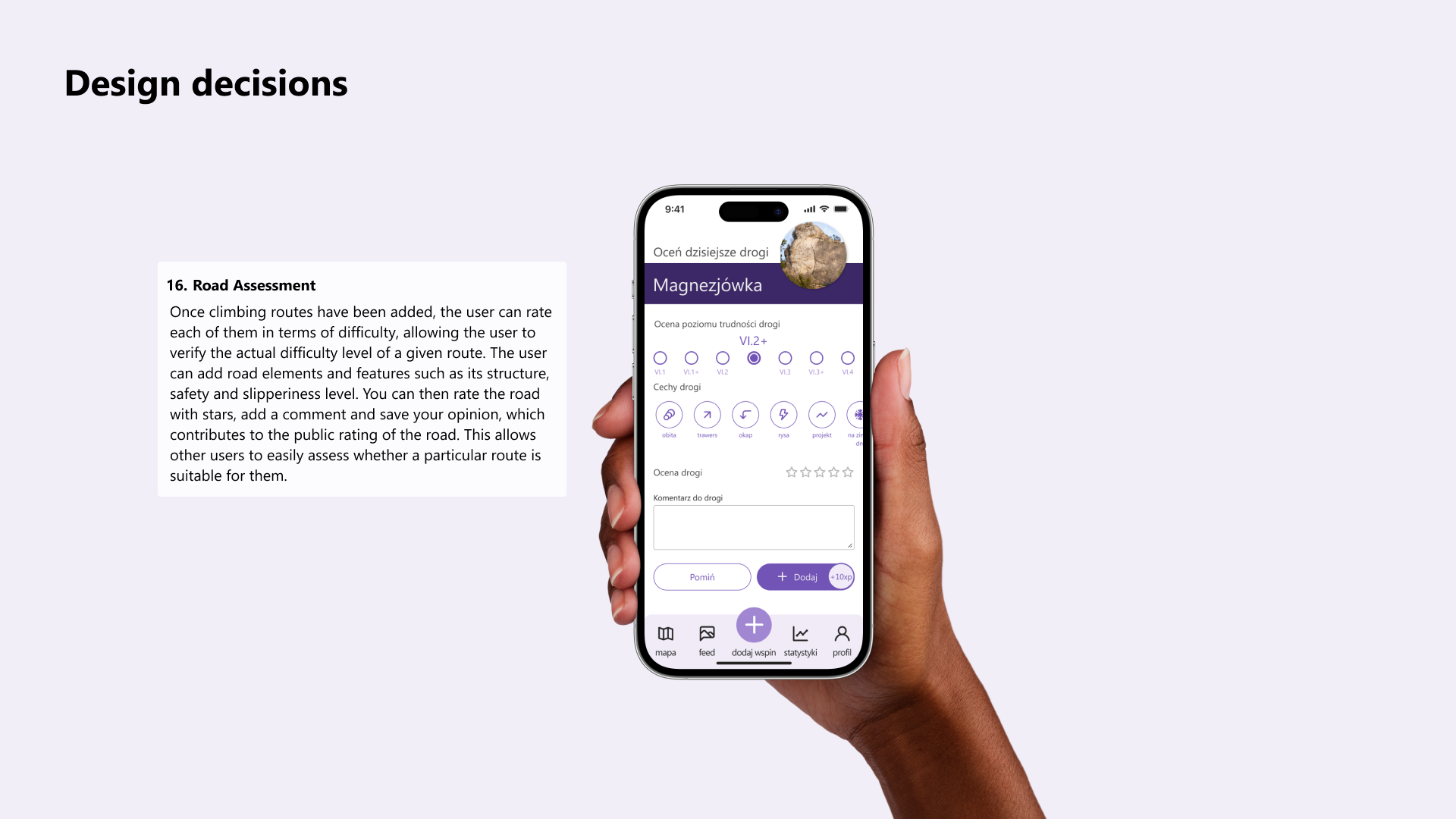
Key features in the final design included:
– Interactive map with real-time updates.
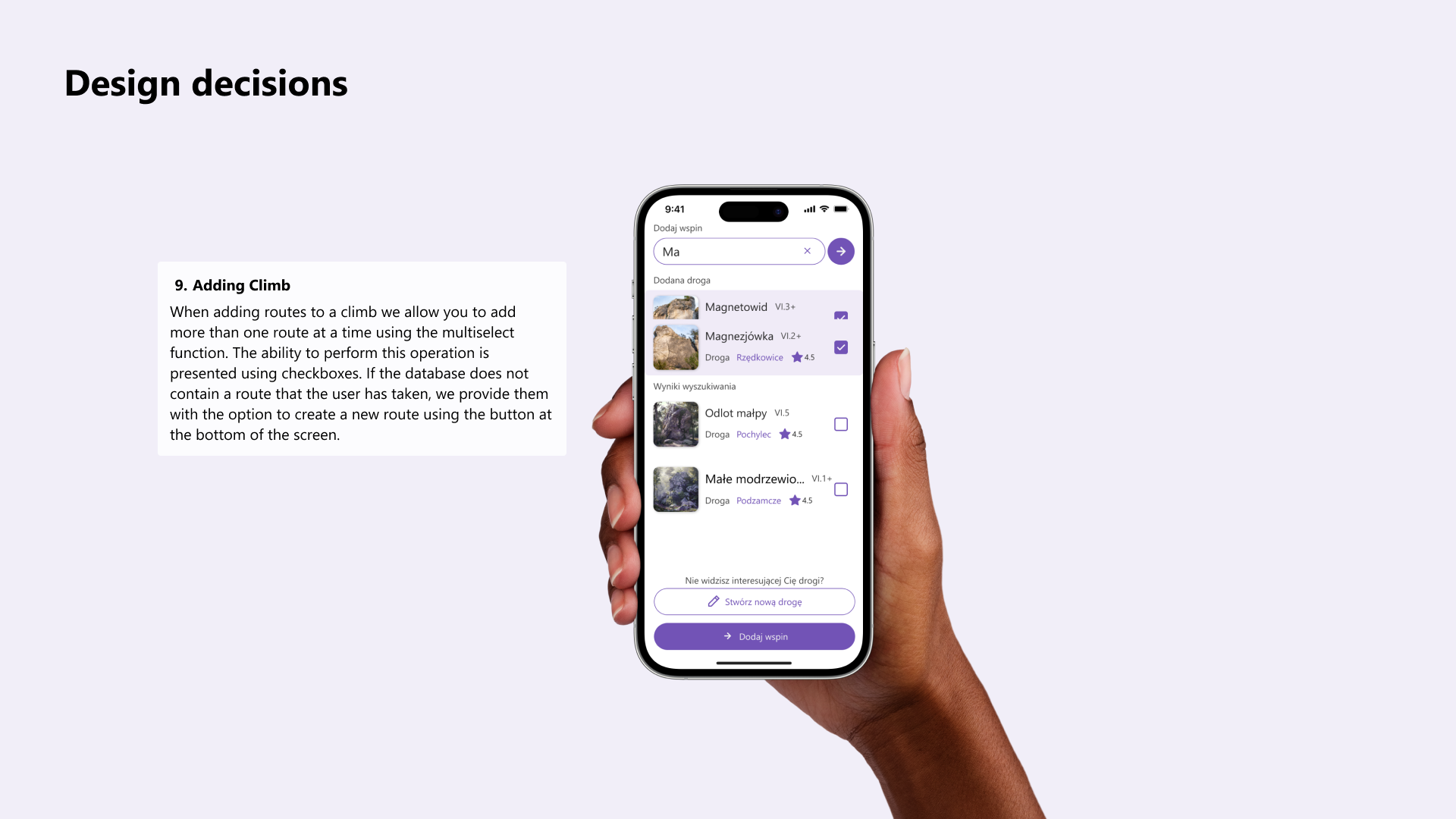
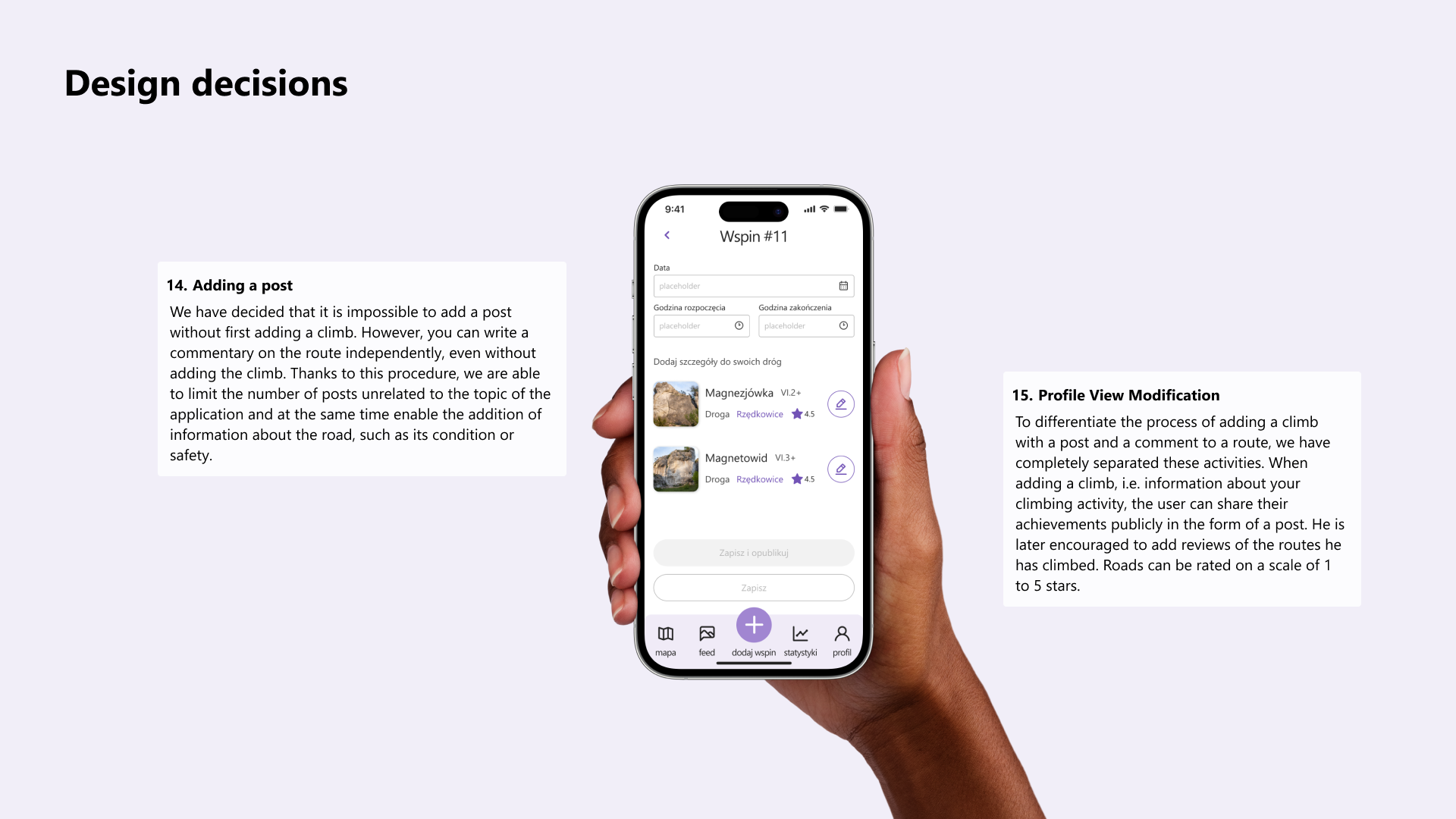
– Easy climb logging and community interactions.
– Prominent gamification and motivational elements

05 / Test - Validating the Prototype
Overview
Streamlined user flows ensured easy navigation between finding routes, engaging socially, tracking climbing progress, and accessing safety features.
Usability Test Plan
Participants were tasked with typical app scenarios, such as finding climbing routes, logging climbs, and engaging with social features, while sharing feedback in real-time.
Usability Test Findings
Participants completed tasks easily, achieving a 96% success rate. However, feedback indicated:
– Difficulty quickly logging climbs due to complexity.
– Requests for enhanced offline functionality.
– Clarification needed in gamification progress indicators.
Priority Revisions
Based on findings, revisions included:
– Simplified climb logging workflow.
– Improved offline data handling.
– Enhanced clarity in gamification.